Archive for March, 2009

Boho Travel Tips

Posted in lifestyle | 2 Comments »
One thing that makes Boho girls awesome is that they have a fabulous sense of independence and adventure. Life is too amazing for us to let it pass us by, so I’m all for venturing out, getting messy, and seeing the world!

When it comes to travel, I know a lot of people stick to cruises, resorts, and tours, but I recommend something a bit more adventurous: going off the beaten track. It is the Boho thing to do after all.

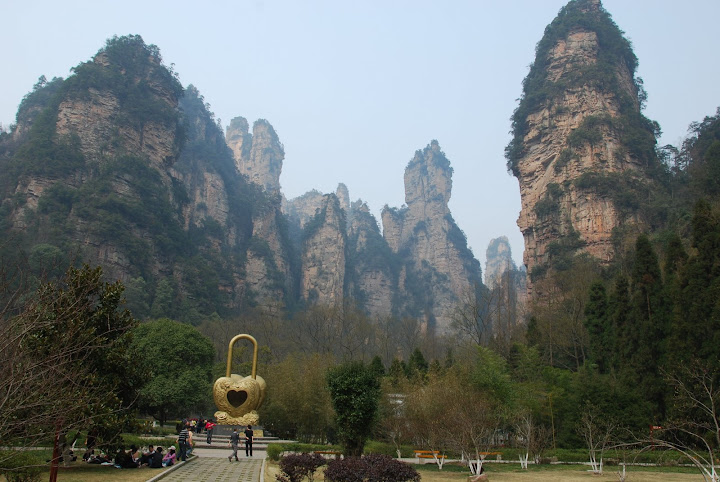
I just returned from China where I gave the whole “adventure” thing a try. To step outside my comfort bubble, I decided to take a solo side trip to Zhangjiajie National Forest Park, which is about four hours away from Changsha in the Hunan Province. I didn’t speak, understand, or read a lick of Chinese, I didn’t know the area, and I didn’t have a guide to accompany me, but that was all part of the experience. I’ve found that if I stick to five simple guidelines, things just work themselves out. Now I’d like to share them with you with hopes that you’ll take more adventures of your own!

1. Always Be Prepared
It’s wonderfully freeing to cast your fate to the wind, but like a boyscout you should always be prepared. Although I went to Zhangjiajie by myself and with no language skills, I prepared by researching the area, booking a hotel, and asking a concierge to write out some helpful phrases such as “Please take me to the Zhangjiajie National Forest Park” and “I would like a bus ticket to Changsha.” I also brought a pen and paper with me so I could draw out other things I might need, and re-chipped my cell phone with a local phone card just in case I needed emergency translation.

2. Go with the flow
One of the most important mindsets to bring along on adventure travel is a willingness to let things unfold as they will. Sometimes an unfortunate or uncomfortable turn of events can turn out to be one of the most memorable or funny things about your trip. During my stay in Zhangjiajie, I got a lot of stares and attention for being a tall Caucasian. Part of me wanted to freak out, but I decided to have fun with it and be a good sport. I can’t tell you how many times I was stopped and asked to pose for pictures with people, but I just hammed it up and pretended this was my one shot at being famous. I even asked some of my spontaneous friends to snap a photo with my camera too, so now I have a bunch of funny pictures of me cheesing with complete strangers! If that’s not a fun experience to remember, I don’t know what is.

3. Be open minded, get messy, and make mistakes
I’ve seen so many closed-minded American tourists sticking only to shopping malls, Starbucks, and international hotels during their stays in foreign cities. What a waste! Perhaps these people are worried about getting lost, making a fool of themselves, or encountering problems, but I’d venture to say that all those misadventures are my favorite things about travel! Didn’t Ms. Frizzle always tell her students to take chances, get messy, and make mistakes? It’s the best way to learn!
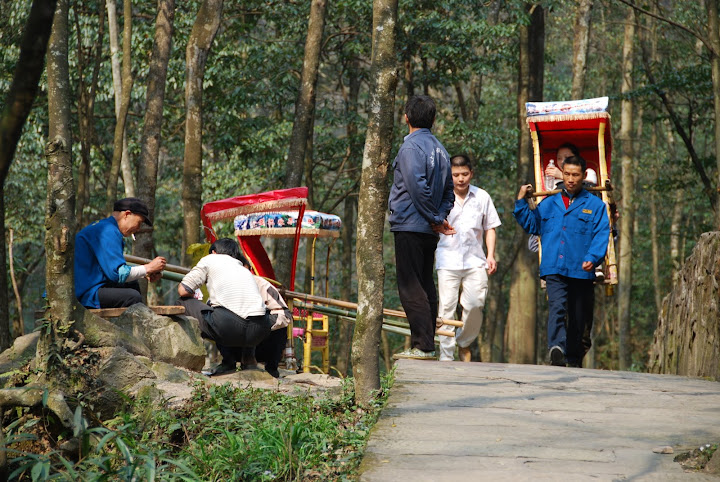
On my first day in Zhangjiajie, I walked so far along a mountain stream trail that by the time I got to the end, it was already starting to get dark, and I realized I’d have to double all the way back to get out of the park and back to my hotel. At first, I thought I was royally screwed, but then I ran across two men carrying a litter, and asked if I could go for a ride. After a drawn out bargaining process (I was short on money, OK??), I hopped on for a ride, and rode like a princess through the forest for a good long time! I decided to get a bit more creative though- after a bit, I asked (or rather gestured and siigned to) my carriers that I wanted to carry the litter for a bit. This gave one of the men a brake, and ligtened the other’s load- plus I had a blast carrying the thing. It gave me a taste of what it was like for these men to carry around a litter all day (they must be STRONG!!!), and I got a total kick out of everyone’s reactions as we passed them by. Was I looking like a complete idiot? Probably, but I had a blast, gained some new perspectives, and cracked a lot of people up.
4. Be respectful
Hey, we’re all for environmentalism and stewartship, so it goes without saying that we should be respectful to nature wherever we go, but we should also be respectful of local rules and customs. I always try to be extra polite and curteous when away from home, because I know I’m acting as a representative of the American people. I won’t litter, yell, get angry, or reject the kindness of others. Though lots of people have stories of being ripped off or treated poorly abroad, I’ve been very lucky and never encountered such hardship. I think a lot of that is due to the way I act. You get what you put out there!
When I was about to leave Changsha for Zhangjiajie, my hotel concierge (and many friends) warned me of pickpockets, scam artists, and other people in general who might try to take advantage of me. Obviously I exercised great caution during my trip, but I also made an effort to be friendly and curteous. What I found was that those I might see as threatening were really just trying to help me. Because I was respectful and patient, I was able to make great friends. Nobody stole from or cheated me in Zhangjiajie as was warned- in fact, people helped me a LOT and even bought me local treats. Yum!
5. Have FUN
This is the ultimate travel tip. If you let yourself be tired, irritable, or uncomfortable, you will be. If you decide to enjoy yourself, you will! Travel isn’t always easy, and it certainly isn’t always comfortable, but that’s what makes it extraordinary.
There were some times during my trip (especially during long bus rides on which everyone smoked and large animals hit and cracked the windshield) when I really could have lost it, but I reminded myself how lucky I was to be out on the road, and I deceded to make the best of everything. I’m glad I did- because I had a fantastic time!

Great luck with all your travels, and if you ever want to share your adventures with us, email some pictures and your story to [email protected]!
On Food

Posted in sweet things | No Comments »

Sometimes I marvel at the difficulty we have with food. We have to much! No wait… there’s not enough. Ah, but it is of such low quality! No- it’s too expensive!! We need to diet! No, we need exercise more! Let’s go GMO and synthetic all the way! No! Organic! Local! Fresh! Raw! ALIVE! GYAAAH!!

I, for one, sometimes feel as though I have no idea what to eat. In such moments of gastronomic crisis, I return to Michael Pollen’s wise words from his book In Defense of Food: “Eat food, not too much, mostly plants.”

It seems so simple- deceptively so, actually. Pollen’s advice to not “eat anything your great-grandmother wouldn’t recognize as food” makes perfect sense, but what about all the foods that resemble what she used to eat?
Take sugar, for example. We have many low and no calorie substitutes these days. They pretty much look and taste like real sugar, but they aren’t. Are we to avoid those, too?
I’m thinking yes, especially after reading about 17-year-old Smitha Ramakirshna’s recent science project, which placed her amongst the finalists of the 2009 Intel Science Talent Search. Smitha found that Splenda “can accumulate in the water supply after people excrete it, potentially harming fish and other living things.”
Odd chemical issues aside, I still think it advisable to avoid processed foods, especially those advertised as low-calorie or low-fat. First off, they’re expensive. Second, I am tempted to eat more of them, because they’re less satisfying and they wear off quickly. In addition, the processing and packaging involved isn’t all that great for the environment.

If you’re out to cut calories, eat healthier, or lose weight, I’d recommend the taking Pollen’s advice. I feel there is a very strong argument for sticking to good old fashioned food. It’s good for local farmers, it’s good for the environment, and it’s good for you, too.

I’m not going to pretend that local, organic food isn’t sometimes more expensive, but higher prices have their benefits. Not only are you paying for the real price of your food (whereas with processed foods, you are often not paying for the environmental damage the food inflicts), you are buying less. By opting for quality and not quantity, you have natural portion control, and really fresh, delicious food. Yum!

Ok, so maybe you’re on board with buying real food and not what Michael Pollen would refer to as “edible food-like substances,” but you hesitate because buying natural staples and actually cooking your own meals seems like a formidable, time-consuming task. Not to worry! You’ll find that cooking and baking on your own, once you have some basic tools, is ridiculously easy. For instnace, I used to make cakes using boxed mixes, but then I tried making a cake from scratch, and realized it took only a couple of extra minutes and ingredients. I haven’t gone back to boxes since, and I must admit, it feels good to say you’ve made something from scratch. It’s as though you truly own your food.

Thanks to the Internet, we have millions of recipes at our fingertips, and thanks to weekends, we also have the ability to create our own microwavable frozen meals. I and many of my friends like to bake large batches on the weekends, then separate leftoveres into indivudually packaged portions that can be heated up and enjoyed throughout the week. It doesn’t take much time, plus it saves money and materials, and peppers long workdays with savory, home-cooked meals.

When it comes to food, there are no clear-cut answers. One food that seems to be healthy and ethical can be worse than its alternatives. Also, it is nearly impossible for us to go all natural or all organic or all local- at least for now. That said, it doesn’t have to be hard to eat well. The most important thing is to exercise common sense and stick to meals that are as traditional, natural, and local as possible. Try to select foods with ingredients that you can picture growing naturally, and have fun with your meals. When all else fails, never fear; just remember to “eat food, not to much, mostly plants.”


If you’d like to hear Michael Pollen talk about his food philosophy, click here to listen to an NPR interview on In Defense of Food.
You can also get a basic summary of his philosophy from this NY Times Article.

Getting Back to Basics

Posted in green quick fix | No Comments »

I don’t know about you, but sometimes I find my green self slipping. From time to time, I neglect to separate out recyclables, or take ridiculously long showers, or forget to bring my reusable shopping bags to the store. In principal, I know it’s not good to do this, but occasionally I cannot bring myself to care. It’s awful that this happens, but it calls to attention one of the key impediments to environmentalism. You see, it can be very hard to care about something that you rarely come into contact with.
I, like many people, live in a very urban environment. My daily contact with nature involves passing by tiny gardens and scrawny sidewalk trees. My food comes from a grocery store. My water comes from pipes. My trash goes down a trash chute. Because I am so removed from the natural environment, it is extremely difficult for me to realize the impact my daily choices have on it. This doesn’t make me a bad person, it just makes me uninformed.
People’s lack of information and connection with the natural environment is, in my opinion, the largest hurdle for us to overcome if we are to enact significant change. Environmentally minded people constantly fight for better design, more intelligent systems, and important controls. We desperately need these changes in order for the human race to thrive (and survive), but it’s hard for naysayers to realize this when they have a shallow understanding of the many and complex human-environmental feedback loops.
Because it is so easy for people in developed societies to not think about where their resources come from and where their waste products go, it is instrumental that stronger connections be drawn via information sharing and education. In addition, people need to rediscover their emotional connection to nature. The world’s forests, deserts, mountains, lakes, rivers, and oceans are majestic and beautiful, and if we take the time to visit them, we will not forget that the earth is worth fighting for.
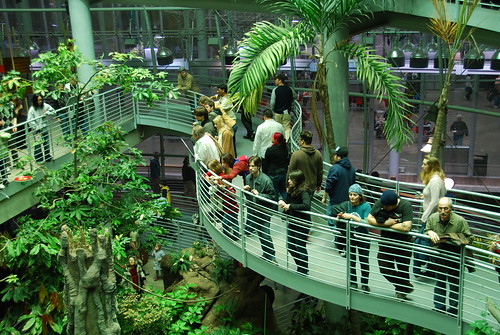
Visiting the countryside can be difficult when factors like time, packed schedules, and limited money come into play. When this is the case, I strongly advocate local parks, gardens, and museums. Around every large city, one can expect to find at least one, if not several, lovely parks or gardens to enjoy, and more museums than ever are showcasing nature’s enchanting flora and fauna. Take the California Academy of Sciences museum in San Francisco’s Golden Gate Park. Complete with a green roof, solar power, and a four-story rainforest (pictured above), the Academy of Sciences is one of many excellent urban places to visit that both refreshes one’s love of nature and envigorates one’s drive to protect it.
Whenever I catch myself slipping, I take a couple of moments to put everything back into context. I push aside my tiny little world complete with its daily dramas and consider the broader scheme of things. Just a couple moments of thought can do wonders. I also make an effort to reconnect with nature whenever possible.
If you, too, occasionally lose your environmental motivation, give these things a try! Reconnecting with nature keeps you thinking and acting green, helps you spread understanding to others, and as an added bonus, reduces stress!